Dealing with Angry Customers: A 7-Step De-Escalation
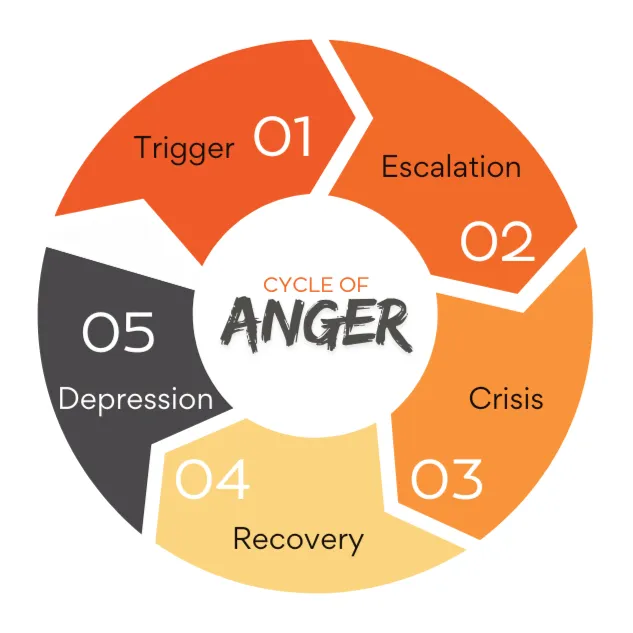
Every sales manager and business owner eventually faces the same moment: a customer who is clearly upset, on the phone, in an email, or standing at the counter. How that first minute is handled often decides whether the account stays or turns into a one-star review on the way out.
This guide breaks the situation into a repeatable process: what causes customer frustration, the exact phrases that calm it, the mistakes that make it worse, and a step-by-step method any team can follow the next time a complaint escalates.
What Is an Angry Customer?
An angry customer is someone whose experience has fallen far enough below their expectations that they express frustration, blame, or hostility toward the business, rather than simply reporting a problem to be fixed.
This is different from a dissatisfied customer, who reports an issue calmly and expects a resolution. With an angry customer, the emotional charge overrides the request itself which means the emotion has to be addressed before the fix will land. Teams that jump straight to the solution and skip this step are usually the ones who see the complaint escalate further, not resolve.
Why Do Customers Become Angry?
Customers become angry when they feel a business has broken a promise, wasted their time, or ignored them — not simply when something goes wrong. A wrong order handled well rarely turns into anger; the same mistake handled badly almost always does.
The most common triggers are:
Poor service — feeling rushed, dismissed, or talked down to by staff.
Long wait times — on hold, in a queue, or waiting on a reply that never comes.
Billing and payment errors — being charged incorrectly, especially more than once.
Product or quality issues — the item or service doesn't do what was promised.
Unmet expectations — vague promises during the sale that don't match delivery.
No follow-up — raising an issue once and never hearing back.
Most of these have one thing in common: the customer feels unheard, not just inconvenienced.
Why Handling Angry Customers Matters for Your Business
How a business responds to an upset customer directly affects whether that customer stays, spends again, or tells other people to avoid the company. For a sales manager, this isn't a soft skill it's a retention and revenue metric.
Existing customers are far cheaper to keep than new ones are to acquire, which makes every well-handled complaint a retention win rather than just a customer-service task. A public complaint that's handled badly can also spread far beyond the original customer on review sites, social media, or word of mouth while one handled well often does the opposite and builds trust in front of an audience that was never even angry to begin with.
There's also a well-documented pattern in customer experience research known as the service recovery paradox: a customer whose problem was fixed well can end up more loyal than if nothing had gone wrong in the first place. That only works, though, if the fix is real and visible not just an apology.
A Step-by-Step Process for Handling an Angry Customer
The fastest way to calm an angry customer is a fixed sequence: stay calm, listen fully, acknowledge the emotion, find the cause, apologize, fix it, and follow up — in that order, without skipping ahead to the solution too early. Many customer-service training programs, including the Disney Institute's HEARD framework (Hear, Empathize, Apologize, Resolve, Diagnose), are built around this same logic: address the person before the problem.
Stay calm and professional. The customer's tone is not a request to match it. A steady voice is often the first thing that de-escalates a call.
Listen without interrupting. Let the full complaint come out before responding — interrupting is read as dismissal, even when the intent is to help faster.
Acknowledge the concern and show empathy. A short, specific acknowledgment ("I understand why that's frustrating") does more than a generic "sorry for the inconvenience."
Ask questions to find the root cause. Most complaints have a specific trigger underneath the general frustration — find it before proposing a fix.
Apologize sincerely. One clear apology, without excuses attached to it, lands better than a long explanation of why the mistake happened.
Offer a practical solution and set clear expectations. State exactly what will happen and by when — vague reassurance ("we'll take care of it") often restarts the frustration.
Follow up after the issue is resolved. A short check-in after the fix confirms the business kept its word and closes the loop on trust.
Common Mistakes to Avoid When Dealing with Angry Customers
The three most damaging mistakes are Dealing with Angry Customers arguing back, and making a promise the business can't keep each one restarts the anger cycle instead of ending it.
Beyond those three, teams commonly lose ground by:
Blaming the customer or another department — it shifts responsibility instead of resolving the issue.
Ignoring the emotion and jumping straight to policy — quoting a rulebook to someone who is upset rarely lands as helpful.
Delaying the response — every extra hour of silence adds to the original frustration.
Avoiding these is often more effective than any script, because they're the mistakes that turn a fixable complaint into a lost customer.
Best Phrases to Dealing with Angry Customers
The right phrase acknowledges the emotion first and the fix second. A line like "I can see why that's frustrating, and here's what I'll do right now" works better than opening with policy or a bare apology alone.
A few reliable patterns:
Empathy statements: "That would frustrate me too" or "I understand why you're upset about this."
Professional apologies: "I'm sorry this happened, and I want to make it right" — without excuses attached.
Solution-oriented lines: "Here's exactly what I'm going to do, and here's when you'll hear back from me."
Positive closings: "Thank you for your patience while we sorted this out — is there anything else I can help with?"
These work because each one names the emotion or the action specifically, instead of relying on a generic script.
How to Turn Angry Customers into Loyal Customers
A resolved complaint can make a customer more loyal than if nothing had gone wrong, but only if the fix visibly exceeds what the customer expected — a small unscripted gesture usually does more here than a bigger, purely transactional refund.
Personalizing the resolution to the specific complaint, rather than applying a standard company policy, signals that the business actually listened. A follow-up days later confirms the fix held. And feeding recurring complaints back into product or process changes turns every angry customer into free, high-quality market research.
To know whether this is actually working, most businesses track it with two simple metrics: CSAT (Customer Satisfaction Score), measured right after the interaction, and NPS (Net Promoter Score), tracked over time. Watching both after a complaint-resolution process changes is one of the clearest ways for a sales manager to prove the process is paying off.
Dealing with angry customers will never be pleasant, but treated as a fixed process rather than an improvised reaction, it becomes one of the highest-leverage skills a sales team can build — protecting revenue, reputation, and repeat business at the same time.
Frequently Asked Questions
What is the best way to deal with angry customer?
Stay calm, listen without interrupting, and acknowledge their frustration before offering a fix. Skipping straight to the solution without addressing the emotion first is the most common reason complaints escalate further instead of resolving.
How do you calm down an angry customer?
Use a specific empathy statement ("I understand why that's frustrating") rather than a generic apology, then explain exactly what you'll do and by when. Vague reassurance tends to prolong the frustration rather than reduce it.